Author: IBL News

  • Mark Zuckerberg shares vision of ‘AI superintelligence’

    Mark Zuckerberg shares vision of ‘AI superintelligence’


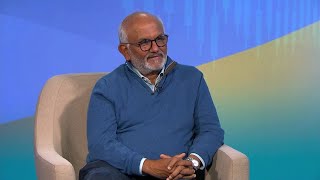
    Meta CEO Mark Zuckerberg says the goal is to focus on what he calls “personal superintelligence,” aiming to make everyday tasks easier and faster.

    Source: Youtube

  • Unpacking the White House AI Action Plan with OSTP Director Michael Kratsios

    Unpacking the White House AI Action Plan with OSTP Director Michael Kratsios


    Unpacking the White House AI Action Plan with OSTP Director Michael Kratsios.

    Source: Youtube

  • Brown University Will Spend $50M on State Programs to See Its Federal Funding Restored

    Brown University Will Spend $50M on State Programs to See Its Federal Funding Restored

    IBL News | New York

    Brown became the third Ivy League university in a month to reach an agreement with the Trump administration to see research funding restored.

    In April, the Trump administration blocked $510 million in federally sponsored medical and health sciences research funding from flowing to the school. In its 2024 fiscal year, Brown received about $184 million through federal grants and contracts.

    The new deal, announced yesterday, requires Brown University to spend $50 million in Rhode Island’s workforce development programs over a decade. It also requires the institution to comply with the White House’s vision on transgender athletes, anti-semitism, and merit-based admission policies.

    Per the agreement, Brown will dictate its curriculum and the content of academic speech.

    In an open letter on Wednesday, Brown’s President, Christina H. Paxson, said the agreement “preserves the integrity of Brown’s academic foundation, and it enables us as a community to move forward after a period of considerable uncertainty.”

    However, the Trump administration depicted the deal as an ideological victory. The education secretary, Linda McMahon, said the deal would be part of a “lasting legacy of the Trump administration, one that will benefit students and American society for generations to come.”

    “The Trump administration is successfully reversing the decades-long woke-capture of our nation’s higher education institutions,” Ms. McMahon stated.

    Observers, including the student community and media outlets like The New York Times, saw the deal as capitulation to the Trump administration.

    This month, the U.S. government has also reached agreements with the University of Pennsylvania and Columbia University.

    White House officials are still negotiating with Harvard University and representatives of other schools.

    On the other hand, the Trump Administration accused Duke University of “systemic racial discrimination” in its health care system and froze $108 million in federal funds.

    Amid this budget crunch, the institution is weighing layoffs alongside about $350 million in cuts, amounting to roughly 10 percent of its budget.

  • AI agents could change how you use the internet

    AI agents could change how you use the internet


    OpenAI and other big tech companies are starting to roll out the next wave of artificial intelligence, designed to operate with more autonomy.

    Source: Youtube

  • Hertz customers say AI car scans lead to unfair damage fees

    Hertz customers say AI car scans lead to unfair damage fees


    Hertz customers are complaining about surprise damage fees after the company began using AI scanners to inspect rental cars at several U.S. airports.

    Source: Youtube

  • New frameworks for hyperscalers power the AI demand

    New frameworks for hyperscalers power the AI demand


    Tech companies needing to power AI data centers could help unlock as much as $350 billion in funding for new nuclear capacity by 2050 through power-purchase agreements, behind-the-meter contracts and strategic equity investments, helping lower financing risks.

    Source: Youtube

  • What access to future OpenAI models means for Microsoft

    What access to future OpenAI models means for Microsoft


    Extending the partnership with OpenAI will allow Microsoft to keep improving its AI offerings, says Goldman Sachs Global Investment Research Managing Director Kash Rangan.

    Source: Youtube

  • Actions speak louder than LLMs (behavioral AI)

    Actions speak louder than LLMs (behavioral AI)


    Your actions speak louder than words—what if AI were listening? When AI understands behavior, not just language, entirely new possibilities emerge.

    Source: Youtube

  • A student guide for AI in college writing

    A student guide for AI in college writing


    A student guide for AI in college writing.

    Source: Youtube

  • Learners Use AI to Redesigning Instructional Experiences in Real-Time

    Learners Use AI to Redesigning Instructional Experiences in Real-Time

    IBL News | New York

    Learners are increasingly becoming instructional designers, identifying gaps in the learning experience and utilizing AI to address these gaps in pedagogical practices.

    These instructional design gaps can be inadequate or inaccessible content, poor practice opportunities, deficient scaffolding, and missing emotional support, among others.

    For example, one student said, “I use ChatGPT as a study guide to explain stuff that the course glosses over, which I then add to my notes. This helps me reinforce what I’m learning, and it’s been hella useful so far.”

    Additionally, learners asking AI to “act as my professor and grade this draft” or “create a practice quiz, asking me each question one by one” reveal that instructional assessment and practice systems are failing to support learning.

    Therefore, experts suggest that instructional designers should closely study how learners interact with AI and adapt their role accordingly, evolving from content creators to learning ecosystem architects.

    OpenAI’s “Top 20 Chats for Finals” data reveal how learners worldwide actually engage with learning content.

    In a May 2025 post, OpenAI disclosed how many learners are using AI to enhance their learning process.

    These are some prompts:

      • “I want to learn by teaching. Ask me questions about [topic] so I can practice explaining the core concepts to you.”
      • “Identify and share the most important 20% of learnings from this topic that will help me understand 80% of it.”
      • “Create a practice quiz for me based on the material. Ask me each question one by one.”
      • “I’m not feeling it today. Help me understand this lecture, knowing that’s how I feel.”
      • “Motivate me.”
      • “Can you take the following slides and help me learn the content in a faster and more interesting way?”
      • “Decode this dense passage into language I can understand.”
      • “Create a game to help me [learning goals]
      • “Give me a step-by-step guide to help me finish [project]. Make the steps as small and achievable as possible.”
      • “Look for any rules and requirements in this assignment and make a checklist that’s easy to understand.”
      • “Act as my public speaking coach and give me feedback to help me improve.”
      • “I want to pressure test my thesis before I keep writing. Suggest the existing opposing viewpoints and any flaws in my logic.”
      • I want to consider multiple perspectives. Find three experts with different points of view and compare their opinions.

    Dr. Philippa Hadman, an expert and researcher on education, wrote,

    “The most successful instructional designers of 2025 and beyond won’t be those who resist AI or those who blindly embrace it. The winners will be those who study what learner AI behaviour teaches us about effective learning design and who use those insights to create more responsive, human-centered learning ecosystems.”

    “The future of instructional design is about learning from what learners create when they have access to responsive, personalized, and emotionally intelligent learning support.”