Coursera announced yesterday its Workforce Recovery Initiative will provide governments free access to 3,800 online courses and 400 Specializations until the end of the year.
The U.S. states of Illinois, Arizona, and Oklahoma, as well as the governments of Colombia, Costa Rica, Greece, Malaysia, Panama, Ukraine, and Uzbekistan, are the first to make the initiative available to their unemployed workers, according to Coursera.
The U.S. states and countries around the world can sign up until September 30, 2020, and those enrolled by then can learn until the end of the year.
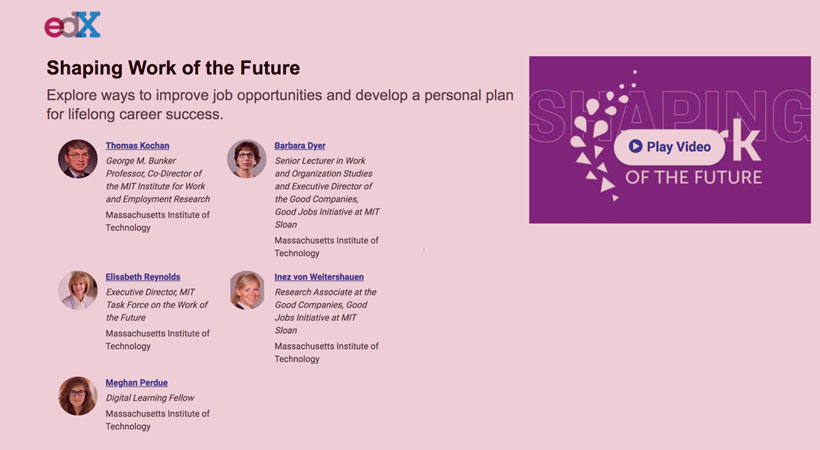
MIT released a free, practical, eight-week-long course that provides resources and tools to plan a career path in the age of increasing dominance of artificial intelligence.
The course, Shaping Work of the Future, is available through MITx on edX and may be accessed at any time of the year. So far, over 17,000 learners have enrolled in the class.
Participants are eligible to sign up and receive an MITx Certificate upon completion.
Now in its sixth year, Shaping Work of the Future, has added new content, such as case studies and lectures from MIT’s leading technology and workplace academics. This year’s partnerships include, among others, the World Economic Forum and the International Labor Organization.
“The course goes beyond the headlines and focuses instead on what steps we can actually take to impact the future of work along with future-proofing our own skillset,” said the authors.
The key to this year’s new content are findings from the initial report by the MIT Task Force on the Work of the Future with a focus on how to improve the quality of jobs, reduce income inequality and provide opportunities for long-term career success for everyone in the labor force. Additionally, featuring a case study on Optimax Systems, Inc.’s innovative management philosophy built on three key pillars, along with a a discussion on the ways participants can bring their ideas to fruition around the creation of a new social contract.
Co-designers of the course includes Thomas Kochan, George Maverick Bunker, the Professor of Management at MIT’s Sloan School of Management, and the co-director of the MIT Institute for Work and Employment Research, and Elisabeth Reynolds, executive director of the MIT Task Force on the Work of the Future and the MIT Industrial Performance Center.
Kochan has contributed two new lectures on “High Road Business Practices” and “The Role of Government” to the curriculum. Meanwhile, Dr. Reynolds’s contributed lectures on “Geography of Work” and “Policy Recommendations from the Task Force.”
David Autor, Ford Professor of Economics at MIT, added a new lecture on “Work of the Past: Work of the Future”.
“If we take the right actions, we can empower workers to build rewarding careers and shape the future of work in ways that meet the needs of individuals, families, economies, and societies,” said Prof. Kochan. “To do so, we first need to understand how work is changing, how firms can compete and prosper while still supporting good jobs, how to update the policies, institutions, and practices governing the world of work, and then outline a path for everyone to help build a new social contract. That’s what this course is all about!”
Session topics are:
Class 1: Challenges & Opportunities for Work: Today and Tomorrow
Class 2: The Past Century of Work
Class 3: How Emerging Technologies are Changing Work
Class 4: Rethinking Skills and Education
Class 5: The Role of Business in Shaping Work
Class 6: The Role of Labor in Shaping Work
Class 7: The Role of Civic Institutions and Government in Shaping Work
Class 8: Putting it all Together: Social Contract Phase 2 and Developing a Personal Impact Plan
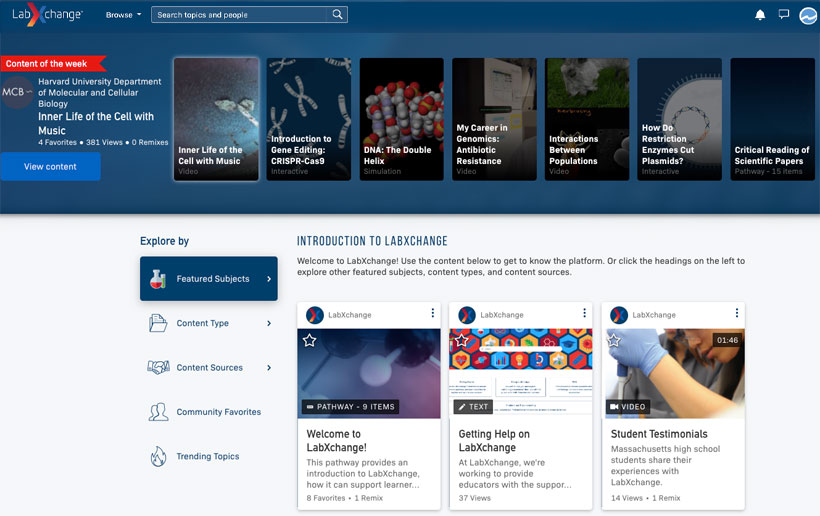
edX provided this month with an overview of some of the technical features of LabXchange.org—Harvard University’s and Amgen Foundation’s recently launched new science education platform. These include a tool called Blockstore, Content Libraries version 2, a new XBlock Runtime, anonymous access, and a new visual assessment editor.
Powered by Open edX open-source software and integrated with edX.org, the LabXchange platform uniquely allows users to freely combine assets together to create and share their own “learning pathways”, which contain videos, text, graphics, assessments, lab simulations, and other instructional assets. Much of the content focuses on the biological sciences.
“You can actually pick the ones you want, sequence them into a learning pathway, and create a much shorter experience that’s really tailored to exactly what you need to learn,”explainedProfessor Robert Lue, Harvard’s faculty director of LabXchange. “We aim to address some of the gaps with current virtual learning, such as the lack of flexibility in the course structure.”
The development of the platform and the program took two years. As a founding sponsor, the Amgen Foundation provided $11.5 million in grants. edX and European provider OpenCraft developed the code –partially available on GitHub.
Single Sign On.Users can use a single account to learn on both LabXchange.org and edX.org, as the same LMS technology powers both sites. This was implemented using the auth-backends plugin, which allows any Django-based application to share user accounts with an Open edX instance.
XBlocks.Each piece of content on the LabXchange site, such as a video or interactive simulation, is an XBlock, just like each component of an edX or Open edX course. Most of the XBlocks used for LabXchange are identical to the versions used to build courses on edX.org, although many have a stylesheet applied to match the visual style of the LabXchange site. A few unique XBlocks are used for new content types unique to LabXchange, such as case studies or interactive simulations.
Blockstore. Blockstore is the next-generation content storage system for the Open edX platform, designed to replace the previous “modulestore” and “contentstore” systems that store data in MongoDB. Blockstore is versioned, scalable, format-agnostic, and file-based. That means that it provides a consistent foundation layer that can store video assets, XBlock definitions (OLX), metadata/tags, courses, and other things we haven’t yet thought of. Blockstore is designed to be able to hold terabytes of such data without losing performance. It’s also deliberately simple, creating a platform that developers can use to build experimental Open edX features and plugins much more easily than ever before.
Content Libraries v2, built using a new XBlock Runtime v2. This XBlock introduces the concept of “Learning Context” to the Open edX platform, where a learning context can be a course, a content library, a LabXchange pathway, a blog post, an admissions test, or any other virtual place where learning can happen. Using the LabXchange site, educators can search these content libraries to find content and assemble learning assets (XBlocks) into new learning pathways.
Anonymous Access – Users can use many features of LabXchange without needing to register an account, including viewing and interacting with learning assets (XBlocks).
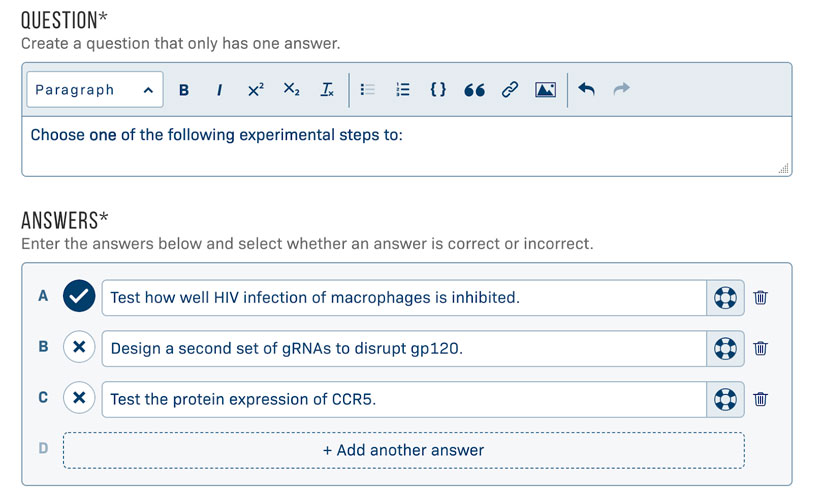
Visual Assessment Editor. LabXchange uses a new visual UI and style editor for problems designed to simplify both learning and authoring. It will be available to all in a future version of Open edX Studio. (See the graphic below).
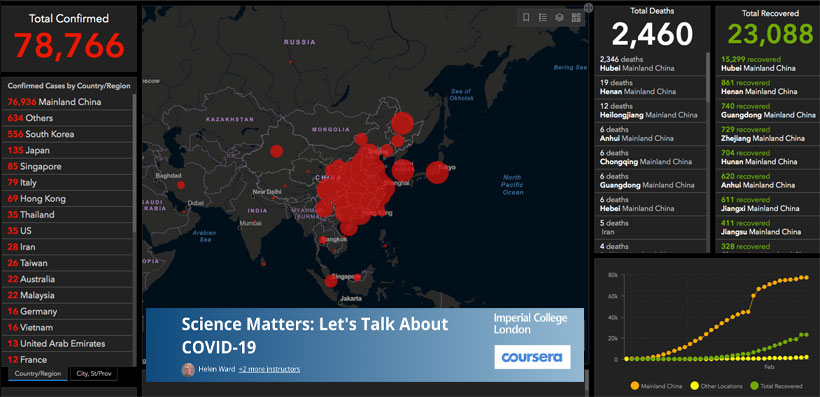
As the coronavirus (COVID19) spread goes on, with 2,460 deaths and 78,630 infected so far, online learning resources multiply.
This month, Imperial College London launched on Coursera a free online course about the science behind the response to the virus outbreak.
“Science Matters: Let’s talk about COVID19” features on video experts from the MRC Centre for Global Infectious Disease Analysis and Abdul Latif Jameel Institute for Disease and Emergency Analytics who have been working on modeling the epidemic, estimating the epidemic size, transmissibility, and severity since the first confirmed cases.
The course provides with updates on the state of the epidemic and deals with topics including:
Basic Reproduction Number (R0) of an infection
Case Fatality Rate: Why it varies and why that matters
Community participation and the role of social media
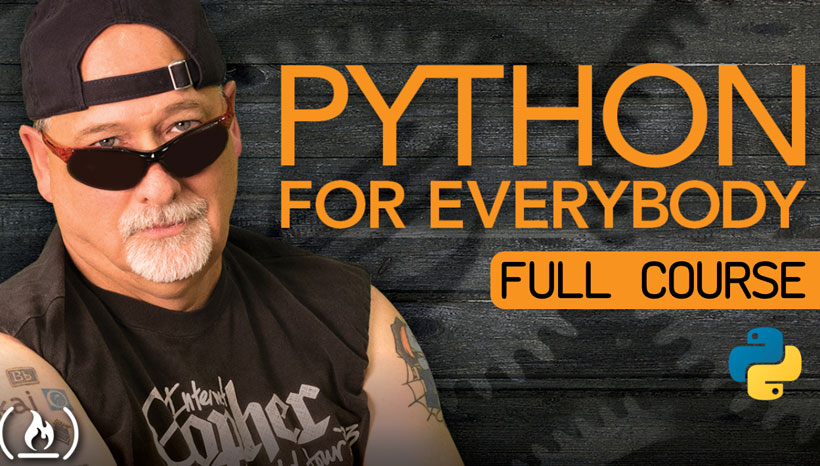
Over 40,000 users have taken FreeCodeCamp.org open courses, including Dr. Chuck’s ‘Python for Everybody’ full online class.
This course teaches the basics of programming computers using Python 3. It has no pre-requisites and is aimed at anyone with moderate computer experience.
Created by University of Michigan’s Professor Charles Severance (a.k.a. Dr. Chuck), the course is offered for free in several formats:
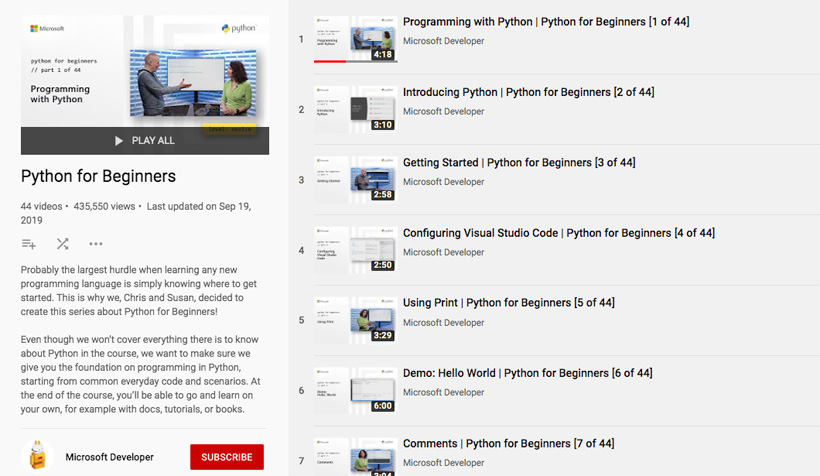
Microsoft has launched a video series to learn Python for beginners on YouTube.
It consists of 44 videos of three-to-four minutes taught by two developers at Microsoft: Christopher Harrison, a senior program manager at Microsoft, and Susan Ibach, a business development manager from Microsoft’s AI Gaming unit.
The course focuses on Python version 3.x, but Microsoft says the lessons should still be valuable to users on Python 2.x.
There are many reasons why Microsoft is investing in Python courses. First, it is an opportunity to expand the population of Python developers using Azure for building AI applications. Second, Microsoft’s own Python extension for Visual Studio Code (VS Code) is its most popular extension in the company’s marketplace for developers.
More Python Courses
In the newest annual ranking of popular programming language by IEEE Spectrum, Python is seating in top place, just ahead of Java, C and R.
Udacity announced yesterday its Pledge to America’s Workers job training initiative. Over the next five years, Udacity will fund 100,000 tech and analytics scholarships on its learning platform.
With this move, Udacity is joining more than 350 companies and organizations, including Google, Apple, and IBM in signing the White House’s Pledge to America’s workers –a project undertaken by the Trump administration.
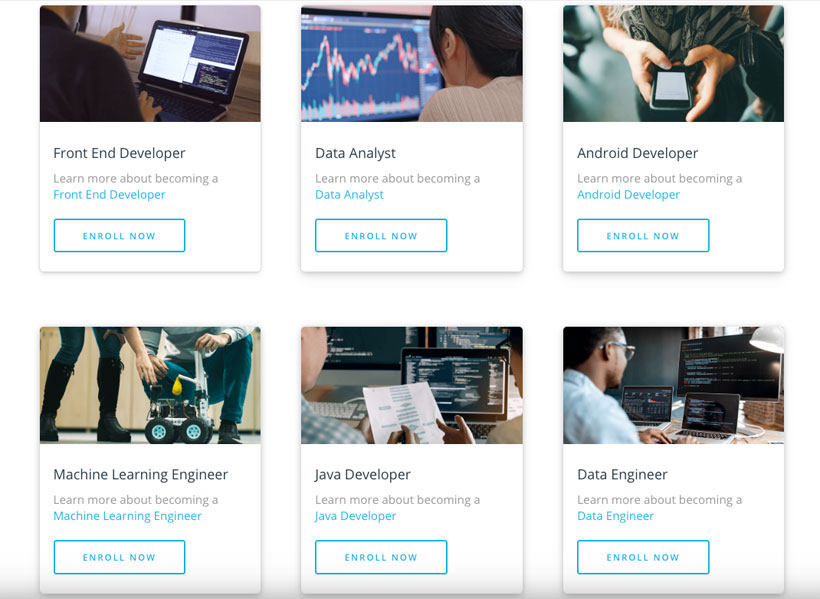
“Udacity’s scholarships will equip America’s workers with the skills they need to succeed in high-paying, future-proof careers in fields such as front-end web development, mobile app development, and data analytics,”said Udacity’s new CEO, Gabe Dalporto.
The program will initially revolve around front-end web development, mobile app development, machine learning, and data analytics. (See image below)
The recipients of scholarships will be, according to Udacity, “low-income individuals looking to learn the in-demand skills needed to land higher-paying jobs and advance their careers.”
Applications will open in early 2020, although the company offered the possibility of pre-registering now through a website.
Google announced on Thursday plans to offer, through a $3.5 million grant, its IT Support Professional Certificate program to 100 community colleges by the end of 2020 in eight new states, including Arizona, Florida, Kentucky, Louisiana, Minnesota, New Mexico, Virginia and West Virginia. Those states come in addition to schools in Illinois, Michigan, New York, Ohio, Texas, Colorado, and Wisconsin, which have offered the program since earlier this year.
The online program consists of six modules, costing $49 each. It takes an average of six months to complete and is designed to prepare learners without a degree or tech experience for an entry-level job in IT support –which has a median salary of $53,000.
Launched at Coursera in January 2018, the program is part of the Grow with Google initiative.
More than 95,000 learners enrolled in these classes and thousands of people have found jobs because of them in large companies such as Wal-Mart, Ricoh, GE Digital and Google.
Leah Belsky, Senior Vice President of Enterprise at Coursera, wrote a blog post analyzing the first year’s impact of the program.
Speaking at an event on October 3rd in Dallas, Texas, Google CEO, Sundar Pichai, said the company’s goal is to “make sure that the opportunities created by technology are truly available to everyone.”
Along with Pichai, President Trump’s senior advisor and daughter, Ivanka Trump, was on hand to discuss the importance of retaining workers in the U.S. During the event, Pichai signed a pledge to the White House to help retain workers in the American tech industry.
This free, 6-hour course, developed by the University of Pennsylvania, explains how to apply viral marketing ideas and be more effective when developing brand and product campaigns.
Drawing on principles from his best-selling book, “Contagious: Why Things Catch On”, Professor at Wharton School Jonah Berger [in the picture] illustrates successful strategies and explains how to craft stickier content, generate more word of mouth and create viral campaigns.
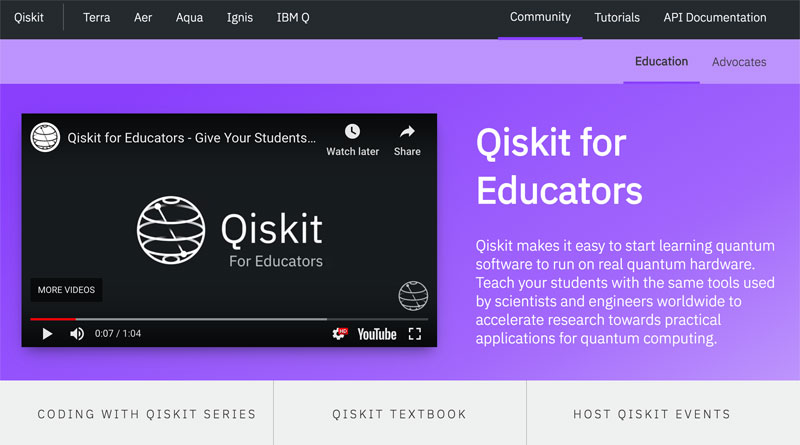
IBM announced last week the release of a video tutorial series, an open-source textbook, and a university hackathon program, in an effort to massively educate on quantum computing. This set of features are available on IBM’s Qiskit learning platform.
A part of this education push is also the new 5-qubit systems for educational use, as well as a new feature to reserve uninterrupted time on one of IBM’s quantum computers for running experiments.
“Our team is committed to making quantum sciences more approachable by investing heavily in the education to support this growing community and establishing the emerging technology as the next generation of computing,” Jay Gambetta, Vice President of quantum at IBM, said in a blog post.
“We need more students, educators, developers, and domain experts with ‘quantum ready’ skills. This is why our team is proud to release educational resources and tools, while also increasing the capacity and capability of our IBM Q systems,” he added.
Quantum computers use qubits, not bits, and programming them is quite different than traditional computers. However, IBM’s Q System can be programmed using Python.
IBM launched the IBM Q Experience quantum cloud platform in 2016, making 5-qubit quantum processors and a simulator available online to the public.
Since then, IBM has released the Qiskit framework to enable users to more easily write and run code for quantum devices as well as providing a more advanced 16-qubit processor.
Over 28 million of experiments and simulations have been conducted to date, IBM says.
Aiming at Self-Learners and Educators
The ‘Learn Quantum Computation Using Qiskit’open-source textbook allows students to learn quantum computation through practical problem sets run on real systems. It is aimed at both self-learners and educators.
The co-author of the book said that a strong background in quantum mechanics is not required.
IBM is also offering a ‘Coding With Qiskit’ video series.
Lastly, IBM is featuring a series of events:
The IBM Q Award Challenges are semester-long competitions on various topics, open to everyone.
The University Hackathon Partnership Program lets universities partner with IBM’s global teams to host a hands-on Qiskit experience, where students get to collaborate with IBM Q experts for developing quantum software programs.
International Qiskit Camps in Asia, Africa, and Europe for competing in teams.
Early this year, IBM showed the IBM Q System One at CES, in Las Vegas. It also announced plans to commercialize a 58-qubit quantum computer within the next several years.